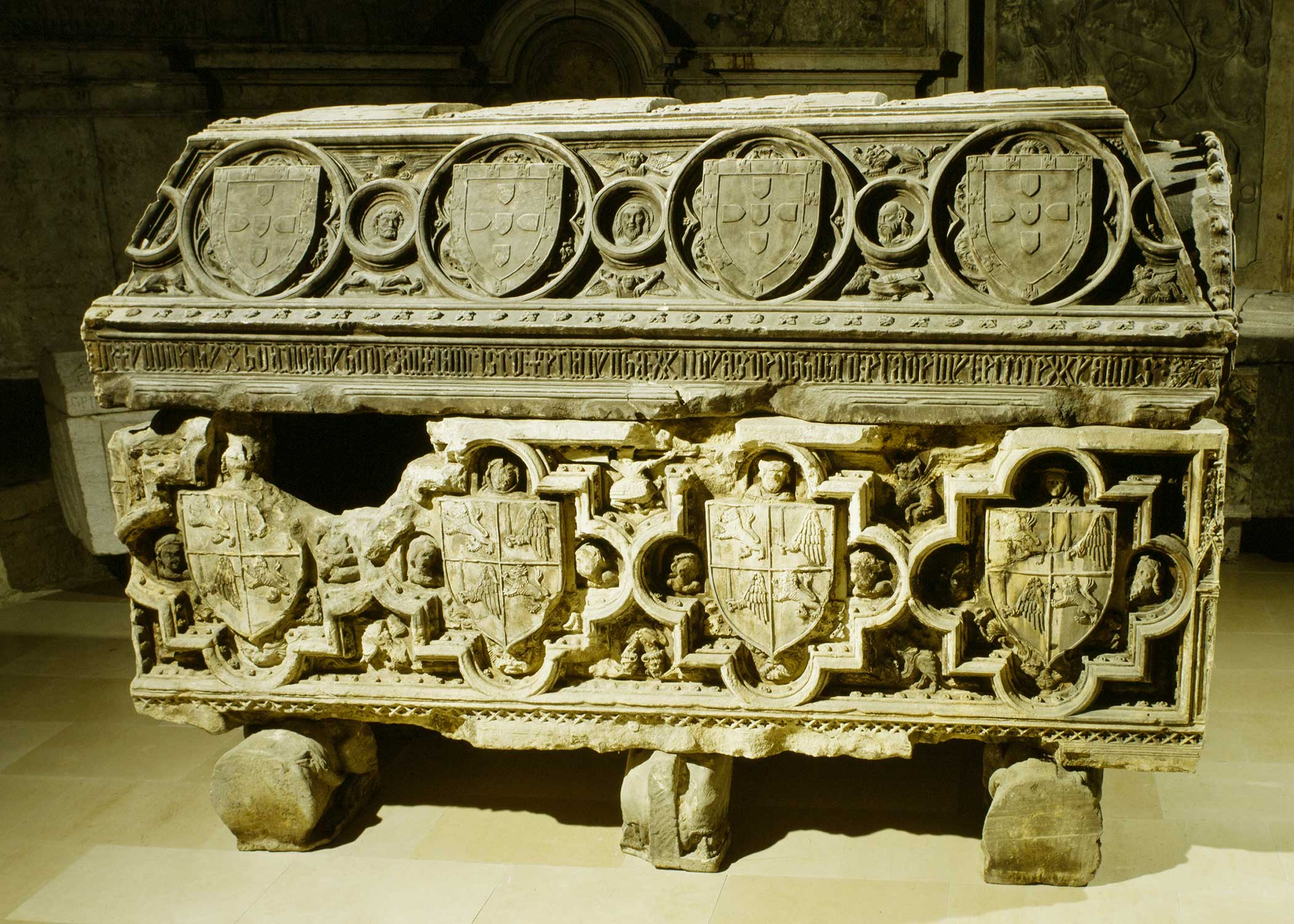
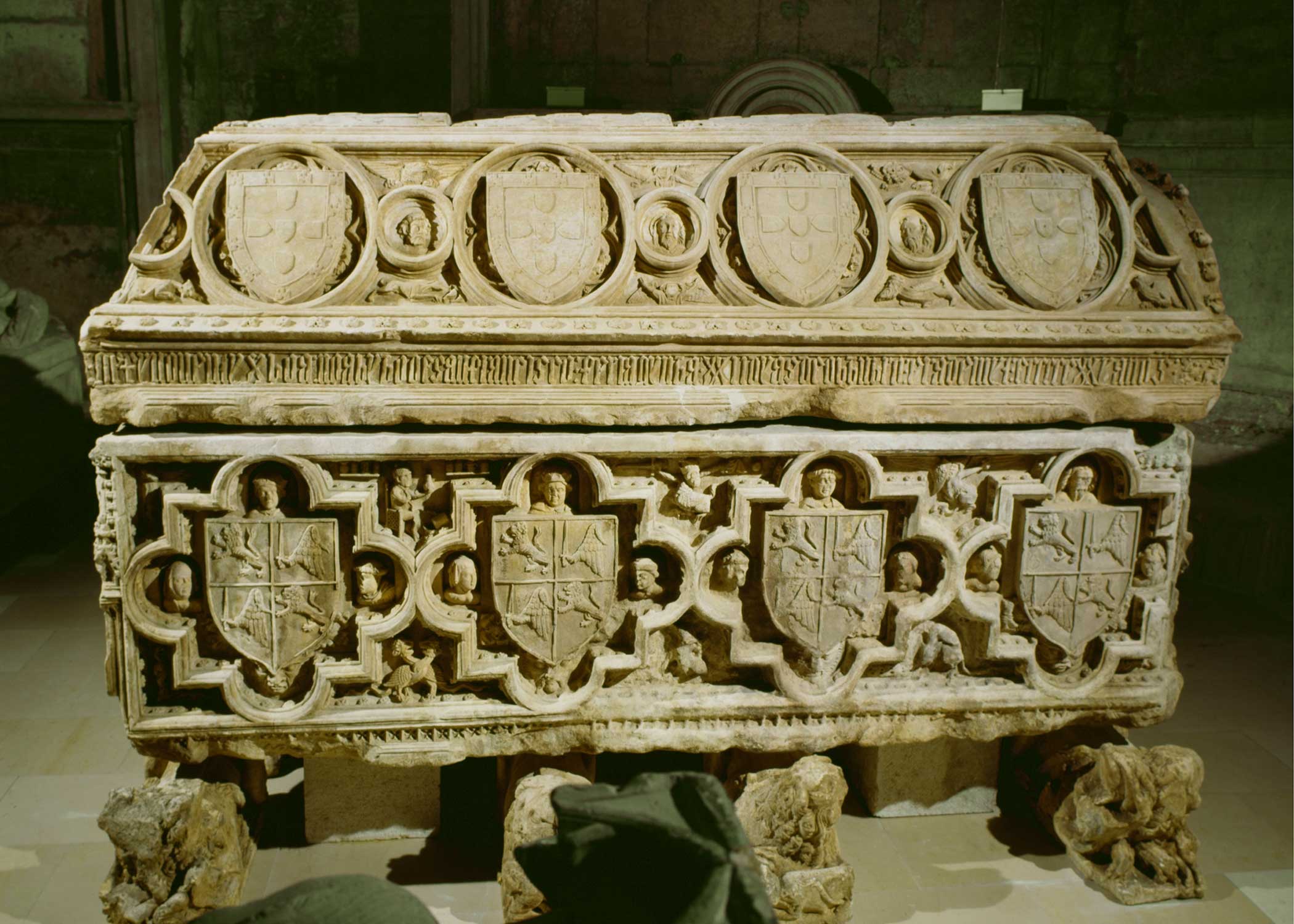
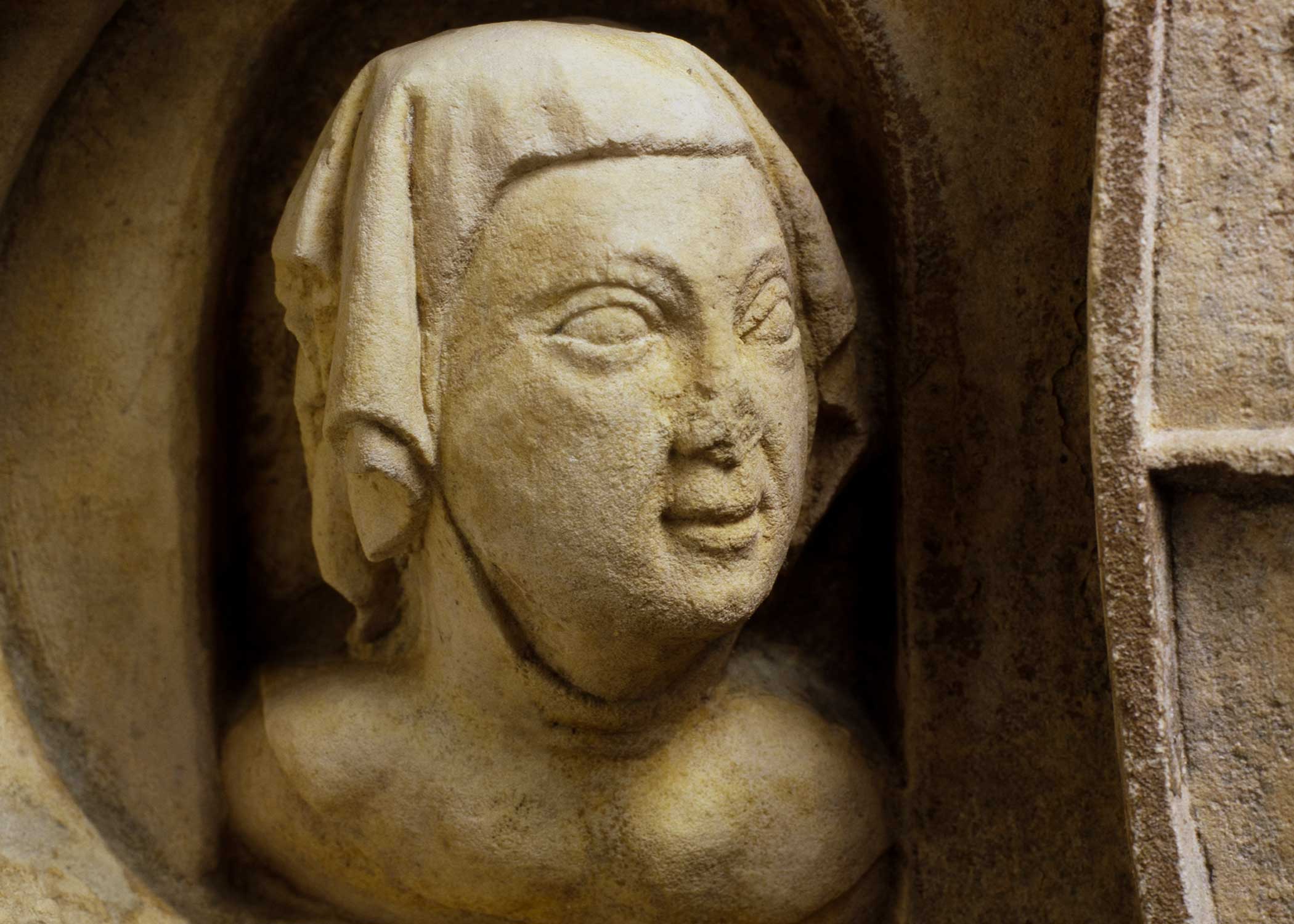
O túmulo de D. Fernando I assume um lugar de rara excepcionalidade e vanguardismo no acervo do Museu Arqueológico Do Carmo.
Esta arca tumular foi executada no século XIV, para o coro-alto do Convento de S. Francisco, em Santarém. Em 1875 veio para o Museu Arqueológico Do Carmo, apresentando várias mutilações, certamente sofridas durante as Invasões Francesas e no âmbito da extinção das Ordens Religiosas em Portugal, em 1834.
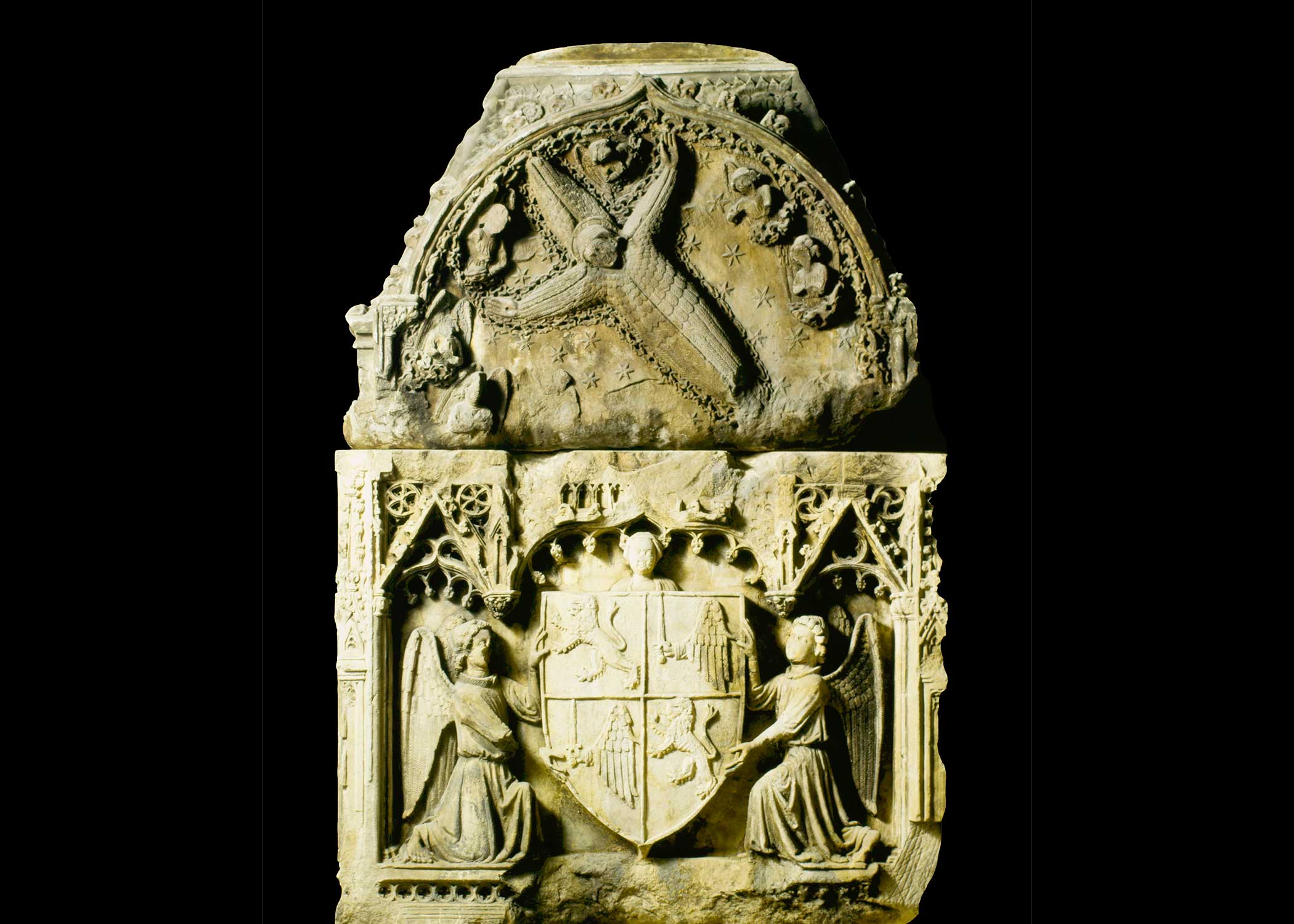
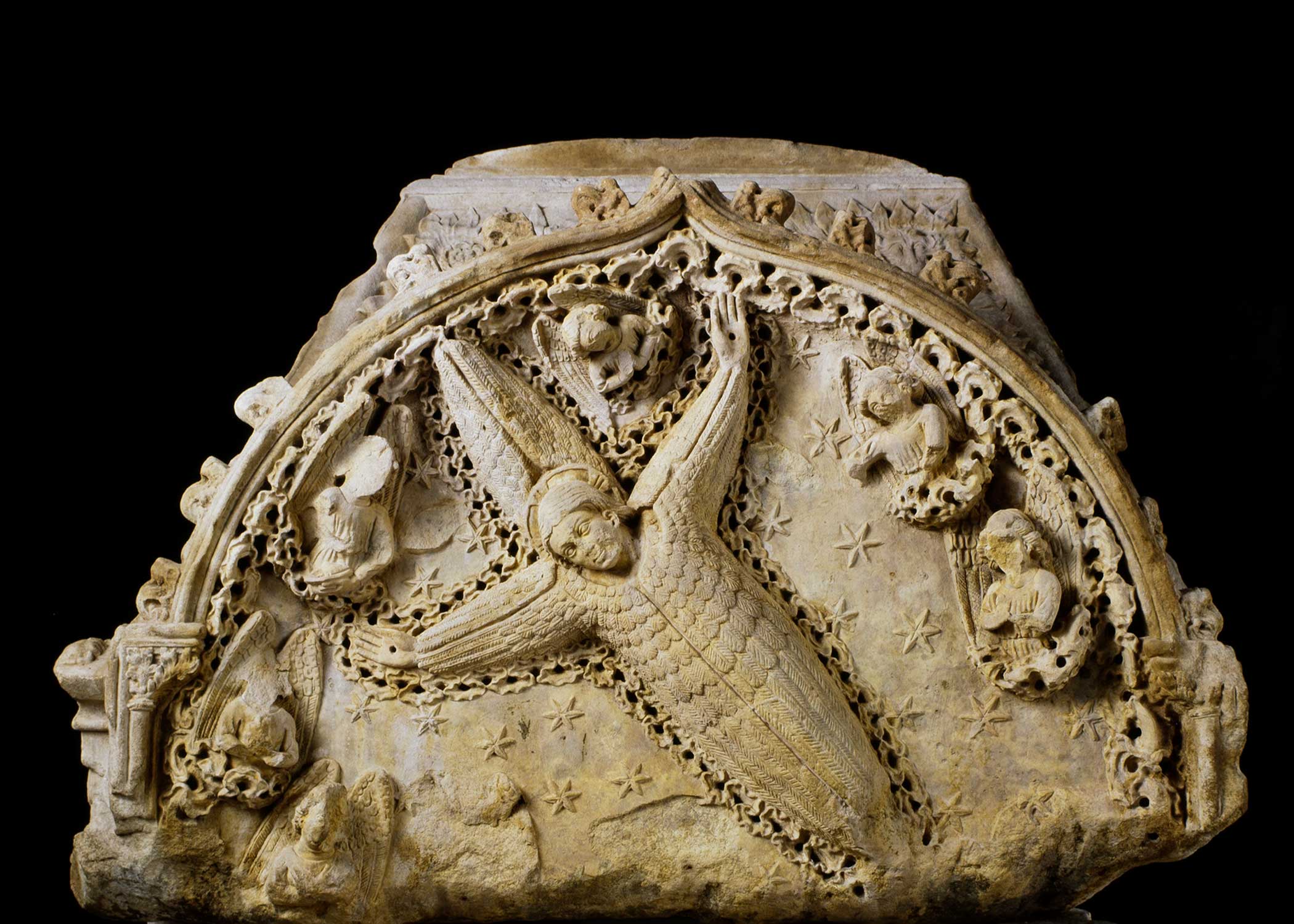
A tampa que cobre a arca é preenchida por escudos de Portugal, atestando a ascendência do rei. Ao longo dos faciais da arca tumular observam-se medalhões onde estão representados os símbolos heráldicos da família da sua mãe, o escudo dos Manuel, em torno junto dos quais figuram os membros laicos e religiosos que compunham a corte. Fora destes medalhões observam-se figuras híbridas ou antropomórficas, que representam o grupo que se encontrava excluído da esfera social do rei: figuras de marginália. A zona da testeira, é dedicada à Vida e Milagres de S. Francisco de Assis, de quem o rei, era naturalmente devoto. A arca assenta, ainda hoje, sobre oito leões bicéfalos, que simbolizam a protecção do defunto.
The tomb of D. Fernando I assumes a place of rare exceptionality and avant-garde within the Carmo Archaeological Museum.
This sarcophagus was executed in the fourteenth century and placed in the Convent of São Francisco in Santarém. In 1875 it came to the museum, presenting several mutilations, suffered during the French Invasions and in the context of the extinction of the Religious Orders in Portugal, in 1834.
The lid that covers the ark is filled with Portuguese coats of arms, attesting to the king's ancestry. Along the faces of the tomb are medallions depicting the heraldic symbols of his mother's family, the great arms of the Manuel family, along with the laymen and religious members that made up the court. Outside these medallions are hybrid or anthropomorphic figures, representing the group that was excluded from the social sphere of the king: marginalia figures. The forehead area is dedicated to the Life and Miracles of St. Francis of Assisi, of whom the king was naturally devout. The ark still rests today on eight two-headed lions, which symbolize the protection of the deceased.