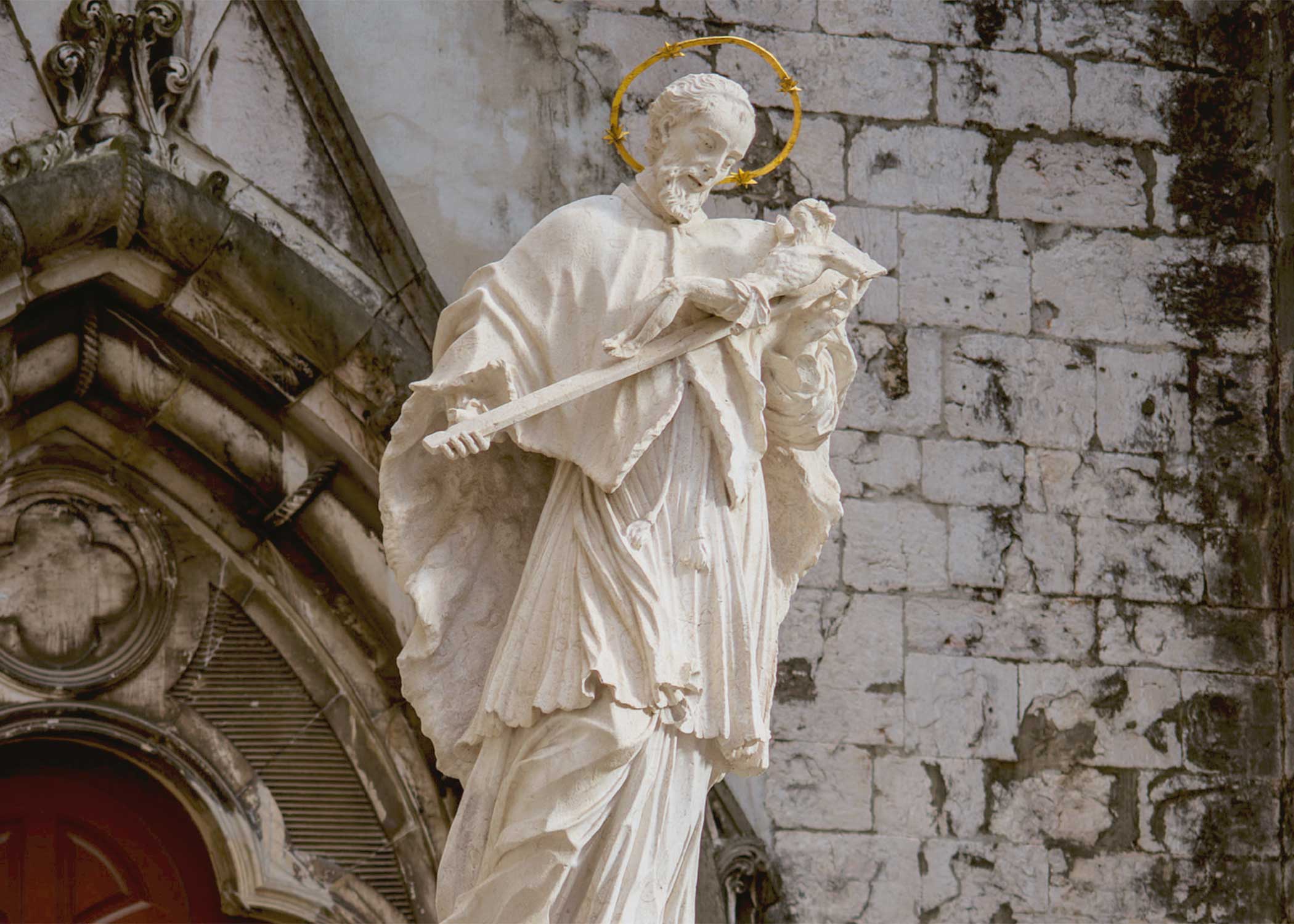
A escultura de S. João Nepomuceno, realizada por Giovanni Antoni Bellini, data de 1743 e foi integrada na colecção do MAC em 1888. Proveio da antiga ponte de Alcântara, onde tinha sido colocada em 1843.
S. João Nepomuceno, nasceu em 1325, na vila Nepomuk, no reino da Bohémia. De origens humildes, foi eleito cónego da Sé Metropolitana de S. Vito de Praga e pregador do Rei Wenceslau IV e a da Rainha D. Joana. A fama das suas pregações e virtudes, tornam-no num orador tão célebre, que rapidamente é considerado santo pelo povo.
No supedâneo da estátua existe uma inscrição que significa o seguinte: A São João Nepomuceno, novo taumaturgo do orbe, que dá ordens à terra, às águas, ao fogo e ao ar, o qual, não tanto em outros momentos, quanto especialmente numa viagem marítima, o iluminou e salvou, pelo que o seu devotadíssimo servo de bom grado lhe mandou colocar esta estátua, no ano da reparação da salvação de 1744.
The sculpture of S. João Nepomuceno, made by Giovanni Antoni Bellini, dates from 1743 and was part of the MAC collection in 1888. It came from the old Alcântara Bridge, where it had been placed in 1843.
St. John of Nepomuk, was born in 1325, the Nepomuk town in the kingdom of Bohemia. From humble beginnings, he was elected canon of the St. Vitus Metropolitan See of Prague and preacher of King Wenceslaus IV and Queen Joan. The reputation of his preaching and virtues make him such a celebrated speaker that he is quickly considered holy by the people.
On the statue's top there is an inscription meaning: Saint John Nepomucene, the orb's new thaumaturge, who gives orders to the earth, the waters, the fire and the air, which not so much at other times, but especially on a journey. He enlightened and saved him, so his most devoted servant willingly ordered him to place this statue in the year of reparation for salvation in 1744.