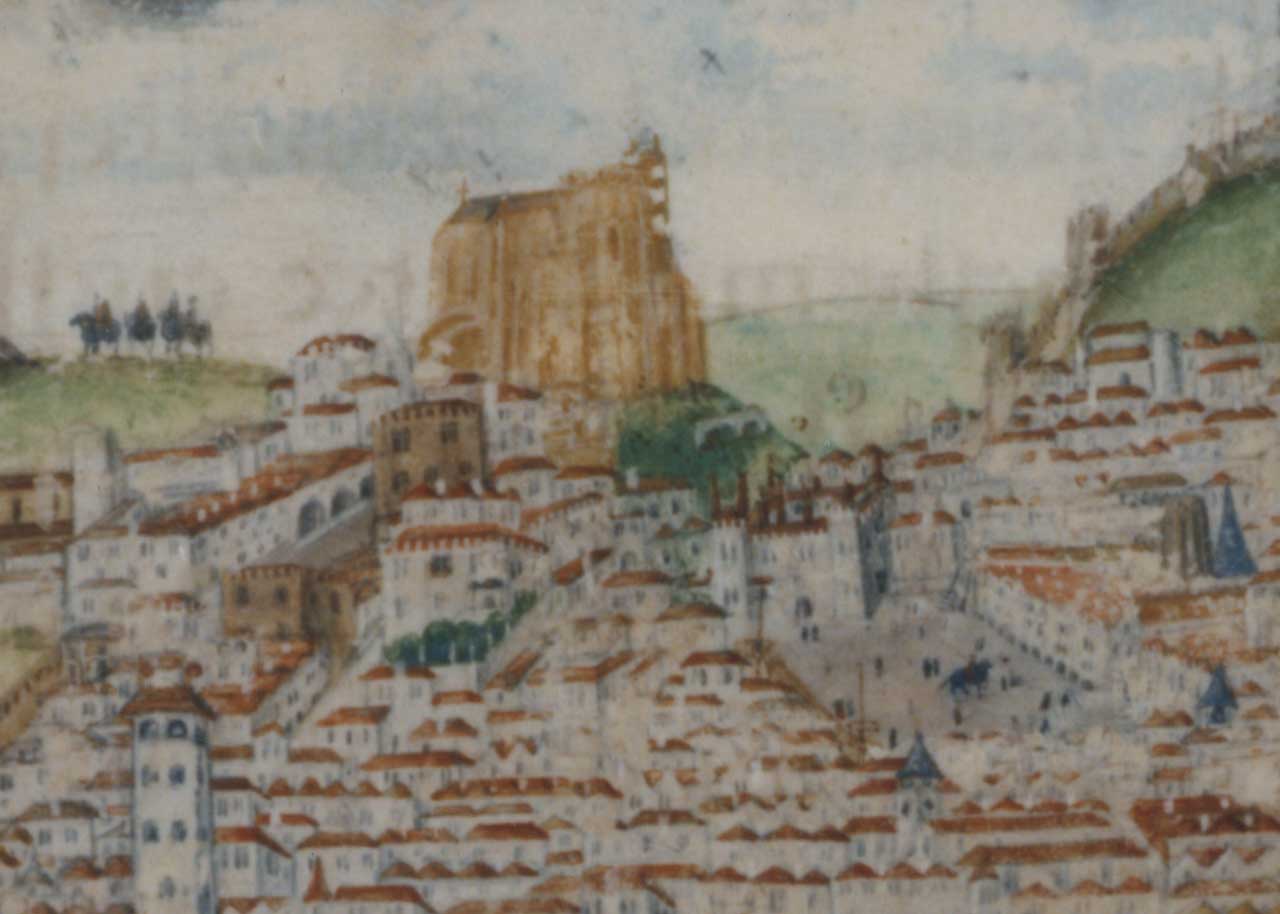
A construção da igreja de Santa Maria do Carmo foi iniciada em 1389, por impulso e devoção religiosa do seu fundador, o Condestável-mor do Reino, D. Nuno Álvares Pereira. Ao ser erguida na colina em frente ao castelo de S. Jorge, destacava-se pela sua grandeza e monumentalidade. Ao longo dos seus vários séculos de existência, a igreja e o seu convento, receberam várias modificações e adaptações, sobretudo no que respeita ao seu recheio artístico, adequando-se aos novos gostos, estilos arquitectónicos e decorativos, transformando-se num dos complexos religiosos mais ricos e poderosos de Lisboa.
Em 1755, o terramoto que arrasou violentamente a cidade, provocou graves danos no edifício, os quais foram agravados pelo incêndio que lhe sucedeu. Após este cataclisma, no que respeita à arquitectura, sobreviveu apenas o portal gótico da entrada e a zona da cabeceira (a parte coberta), onde se encontravam as antigas capelas e a sacristia (actuais salas do Museu). Ao contrário do que se pensou durante várias décadas, o seu acervo artístico-religioso não foi totalmente destruído. Foram salvas pelos frades que sobreviveram, cerca de cem peças que se encontram, actualmente, distribuídas por vários museus portugueses e colecções privadas.
Em Janeiro de 1756, começam os trabalhos de reconstrução da antiga igreja, já em estilo neogótico, os quais foram suspensos em 1834, devido à extinção das Ordens Religiosas em Portugal. As colunas e os arcos que atravessam as naves na zona do transepto são desse primeiro período de reconstrução.
The construction of the church of Santa Maria do Carmo was initiated in 1389, by impulse and religious devotion of its founder, the Chief Constable of the Kingdom, D. Nuno Álvares Pereira. When it was erected on the hill in front of the castle of S. Jorge, it stood out for its grandeur and monumentality. Throughout its several centuries of existence, the church and its convent have undergone several modifications and adaptations, especially as regards its artistic filling, adapting to the new tastes, architectural and decorative styles, becoming one of the religious complexes the richest and most powerful in Lisbon.
In 1755, the earthquake that violently devastated the city, caused heavy damages in the building, which were aggravated by the fire that happened to him, destroying almost all his estate. After this cataclysm, only the gothic portal of the entrance and the bedside area (the covered part) survived, where were the old chapels and the sacristy (present halls of the Museum). Contrary to what was thought during several decades, a good part of its artistic-religious collection survived, being saved by the surviving brothers, about a hundred pieces that are currently distributed by several Portuguese museums and private collections.
The following year, in January 1756, the rebuilding of the old church began, in Neogothic style, suspended in 1834, due to the extinction of the Religious Orders. The pillars and arches that cross the ships are from this first period of reconstruction.