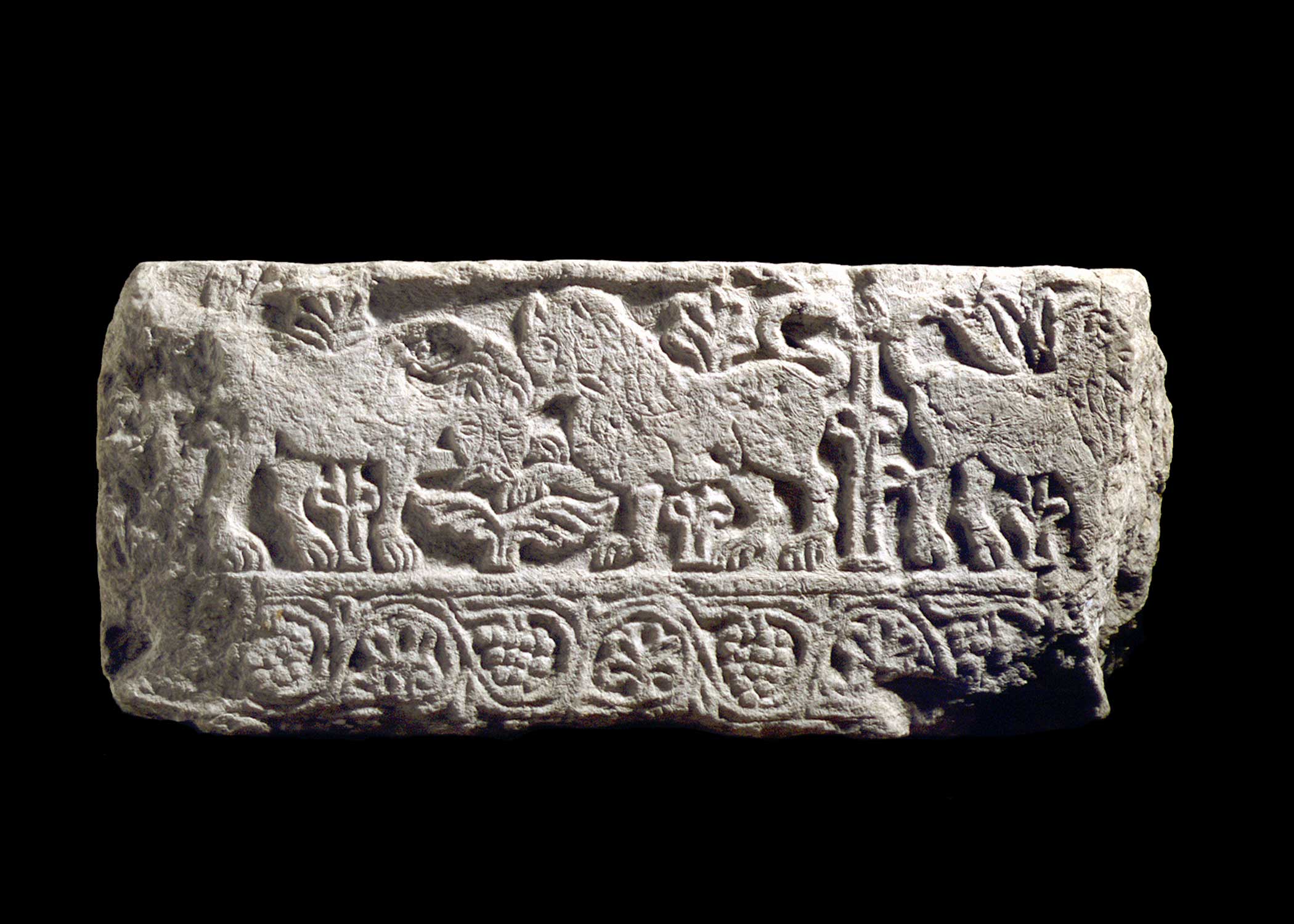
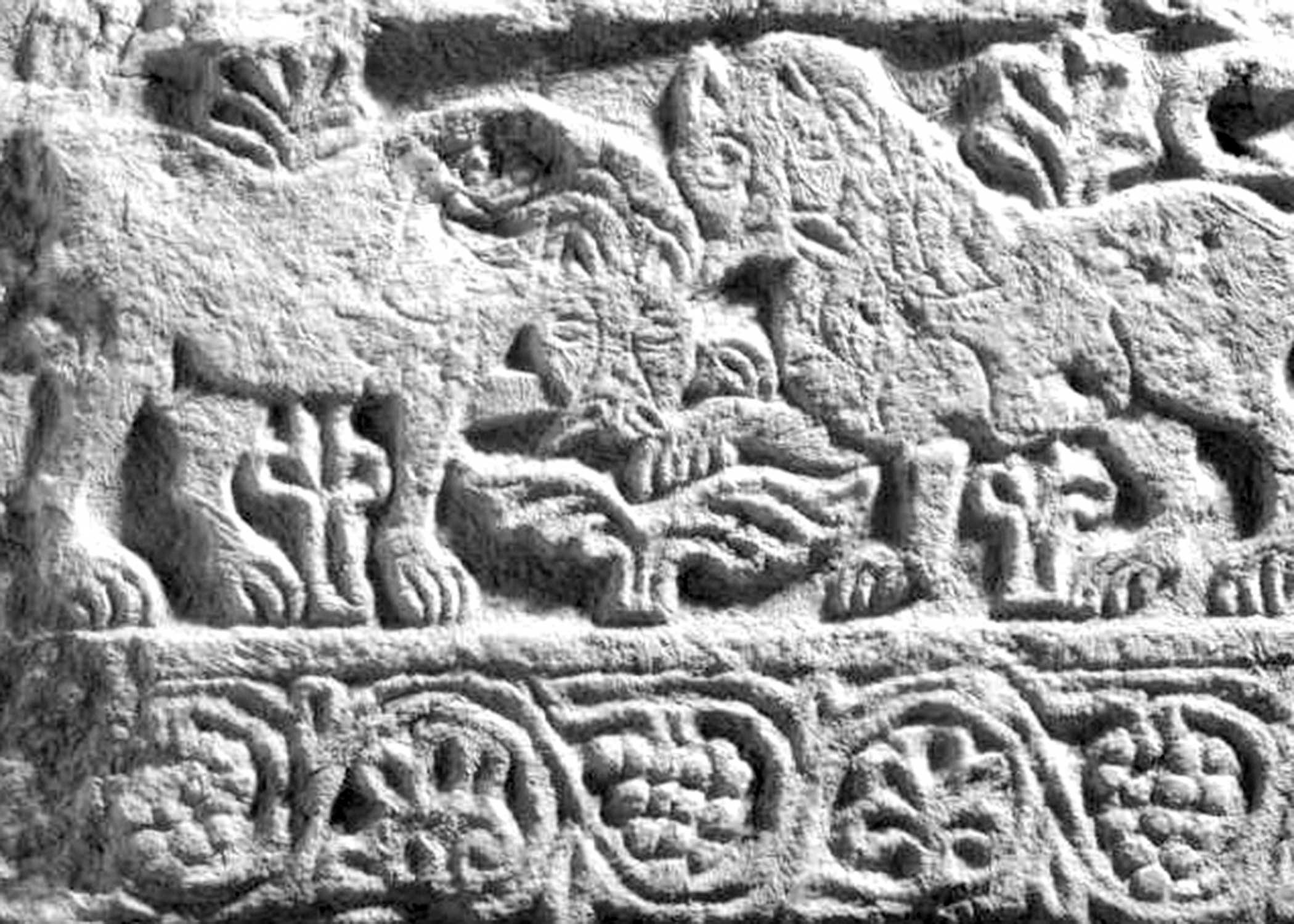
Ainda no contexto da arte moçárabe de influência bizantina, e também com proveniência do antigo Mosteiro de Chelas, surge o Friso dos Leões, encontrado em 1864 por Vilhena Barbosa. A sua composição divide-se em dois planos, aparecendo os leões no primeiro, seguidos de vegetação que cobre o pano de fundo. Na zona inferior está esculpido um friso preenchido com folhas e cachos de uva, que se inserem nos ramos da videira que serpenteia entre eles. videira que serpenteia entre eles.
A temática aqui representada é o Paraíso, onde os leões, esculpidos de perfil, protegem a Árvore da Vida, transmitindo uma certa mensagem de intimidação a quem tem como objectivo aproximar-se.
Still in the context of the Byzantine-influenced Mozarabic art, and also coming from the former Chelas Monastery, comes the Lions Frieze, found in 1864 by Vilhena Barbosa. Its composition is divided into two planes, the lions appearing first, followed by vegetation that covers the background. Underneath is carved a filled frieze, with leaves and bunches of grapes, surrounded by the vine that meanders between them.
The theme represented here is Paradise, where the sculptured lions protect the tree of life, conveying a certain message of intimidation to those who want to get closer.