A Estela Hindu é uma das peças mais exóticas do Museu Arqueológico Do Carmo. Esta proveio da região Deccan Ocidental, mais concretamente entre Maharashtra e Karnataka, onde se utiliza, desde o século VIII d.C., o alfabeto någarî juntamente com o kannada, o qual é utilizado na parte superior deste baixo-relevo, permitindo localizar a sua datação, entre os séculos X e XII d. C.
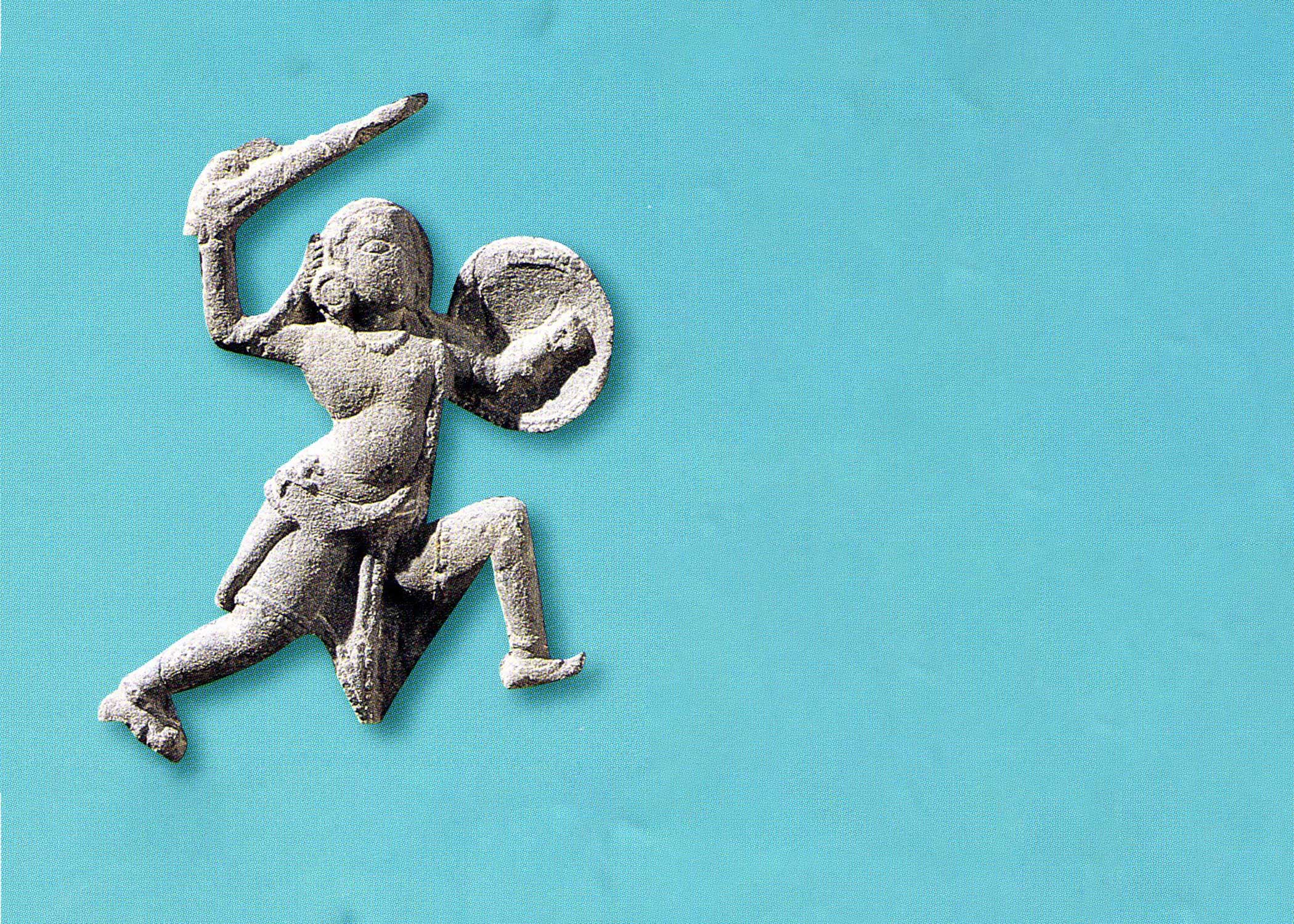
Trata-se de um baixo-relevo distribuído em três frisos, cuja leitura se faz de baixo para cima, onde são retratadas várias cenas da batalha em que o herói esteve envolvido antes de morrer. Este aparece a atacar os seus inimigos com uma espada, enquanto que pisa um deles e seu cavalo, dando a ideia que está a sair vitorioso. Na sua retaguarda, encontram-se os seus companheiros.
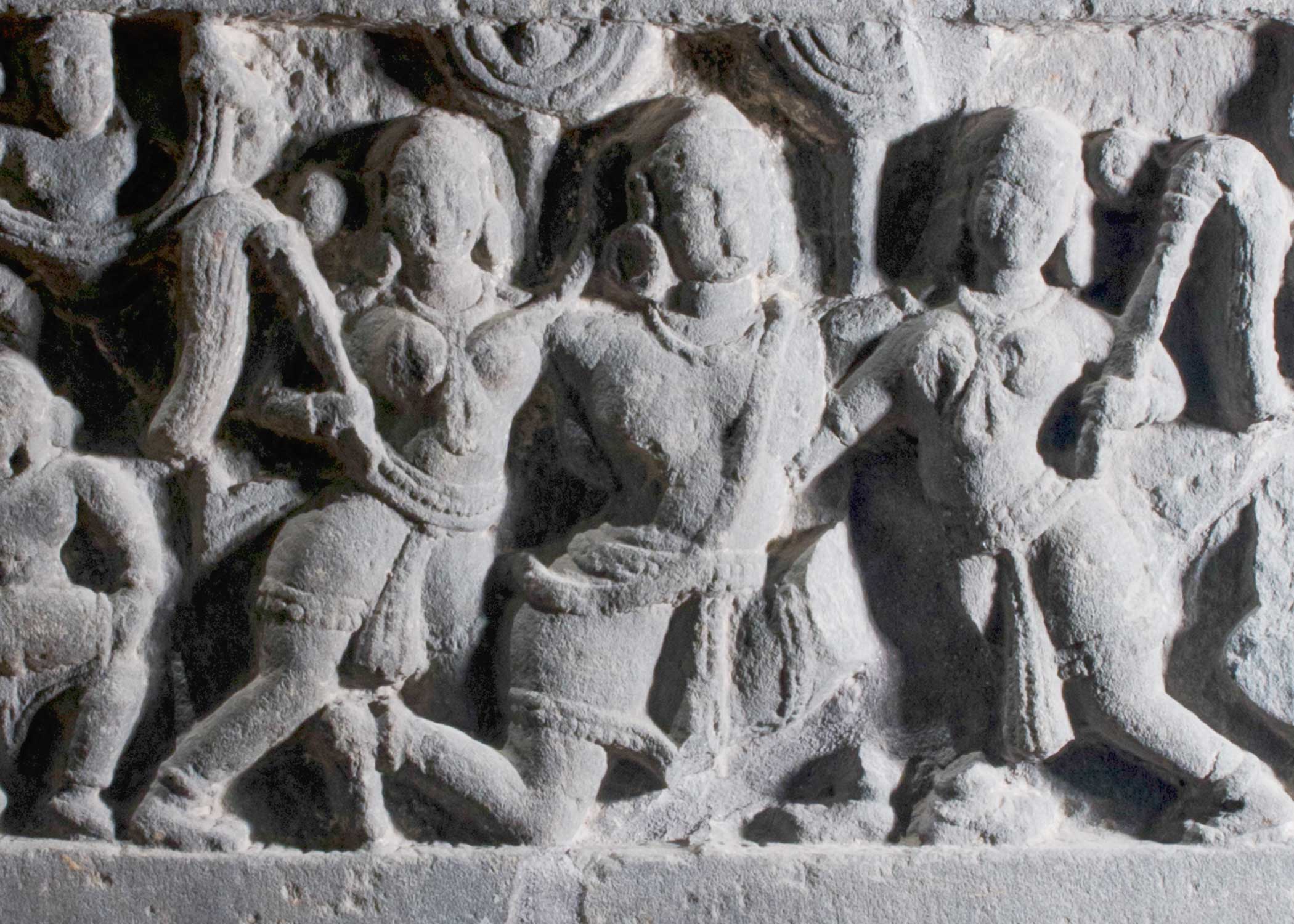
Na cena seguinte, como prémio pelo seu sacrifício, o herói é representado a ser elevado por ninfas para o Indraloka, a sede do deus Indra, uma espécie de paraíso de delícias e prazeres, onde lhe é oferecido o néctar da imortalidade.
A terceira e última cena é ocupada o guerreiro em posição de oração, junto do deus Çiva, que é simbolizado por um linga, por cima do qual se observam grinaldas de flores.
The Hindu Stele is one of the most exotic pieces of the museum. This came from the Western Deccan region, specifically between Maharashtra and Karnataka, where the någarî alphabet has been used since the 8th century AD, along with the kannada, which is used at the top of this bas-relief, allowing to trace its dating, between the tenth and twelfth centuries AD.
It is a bas-relief distributed in three friezes, which is read from the bottom up, where are depicted several scenes of the battle in which the hero is involved before his death.
In the first scene, he appears to attack his enemies with a sword, while stepping on one of them and his horse, giving the idea that he is emerging victorious. At the rear of it are his companions.
In the next scene, as a reward for his sacrifice, the hero is depicted as being raised by nymphs to “Indraloka, the seat of the god Indra, a kind of paradise of delight and pleasure, where he is offered the nectar of immortality.
The third and last scene is occupied by the warrior in prayer position, next to the god Çiva, who is symbolized by a sling above which wreaths of flowers are observed.