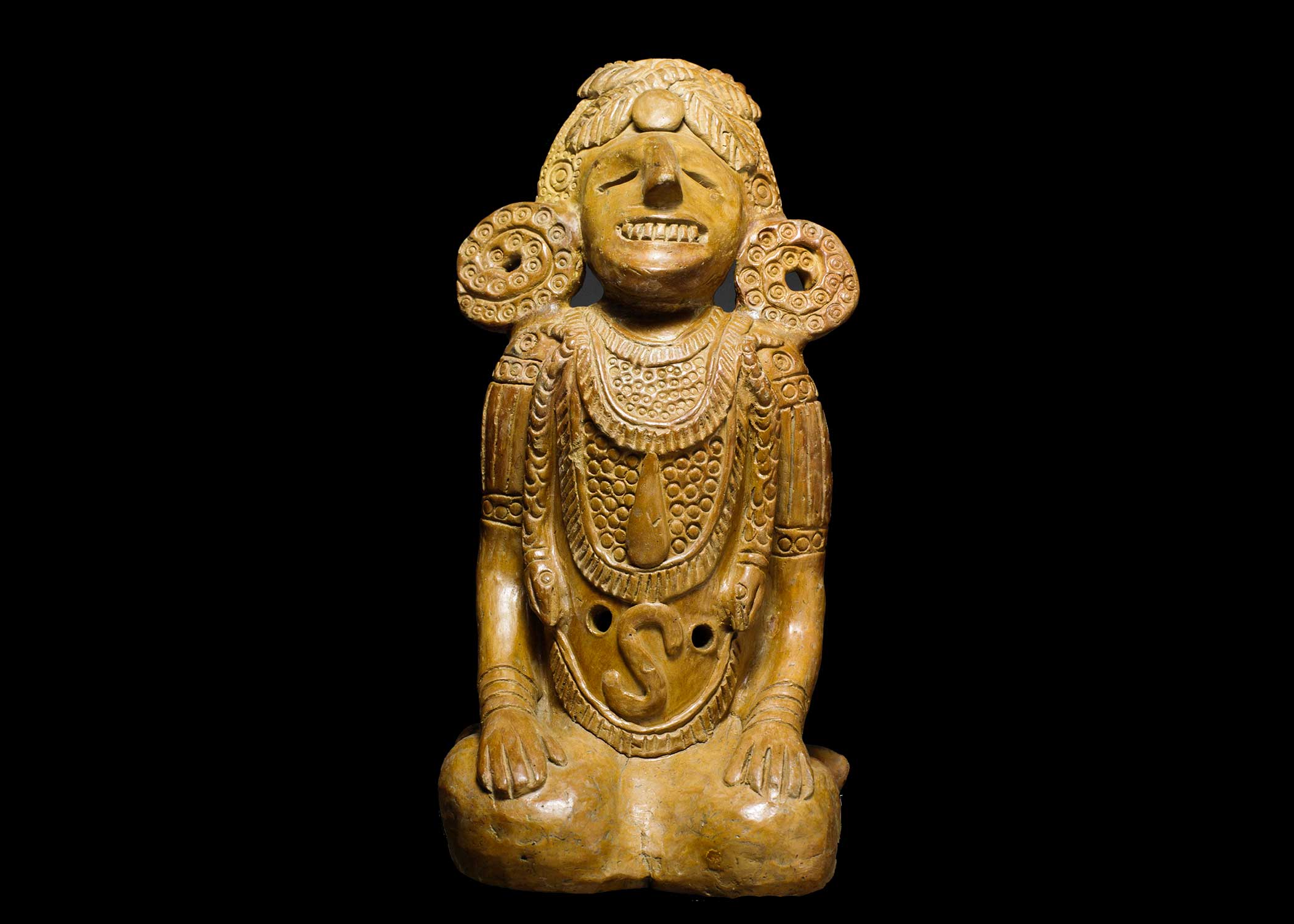
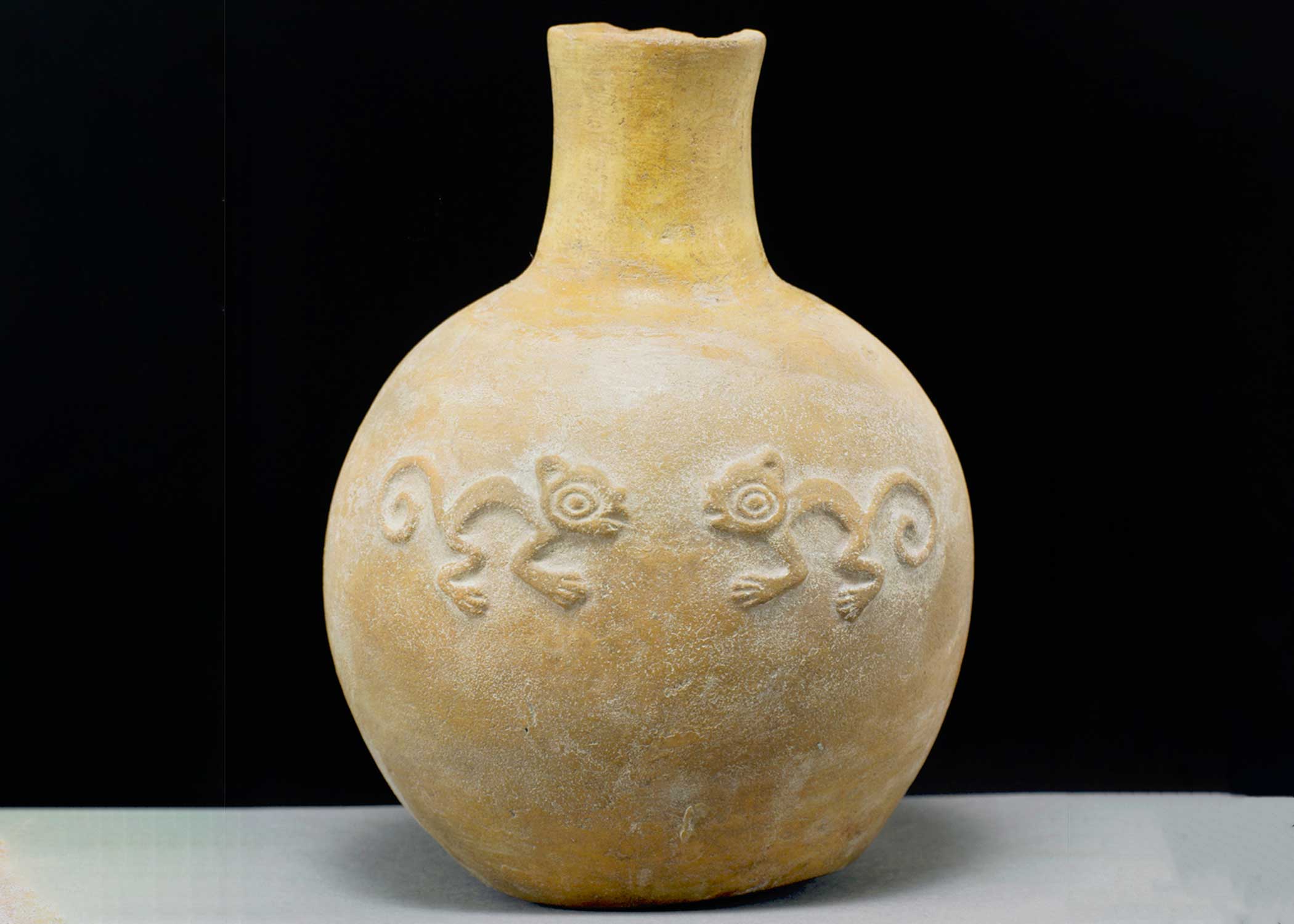
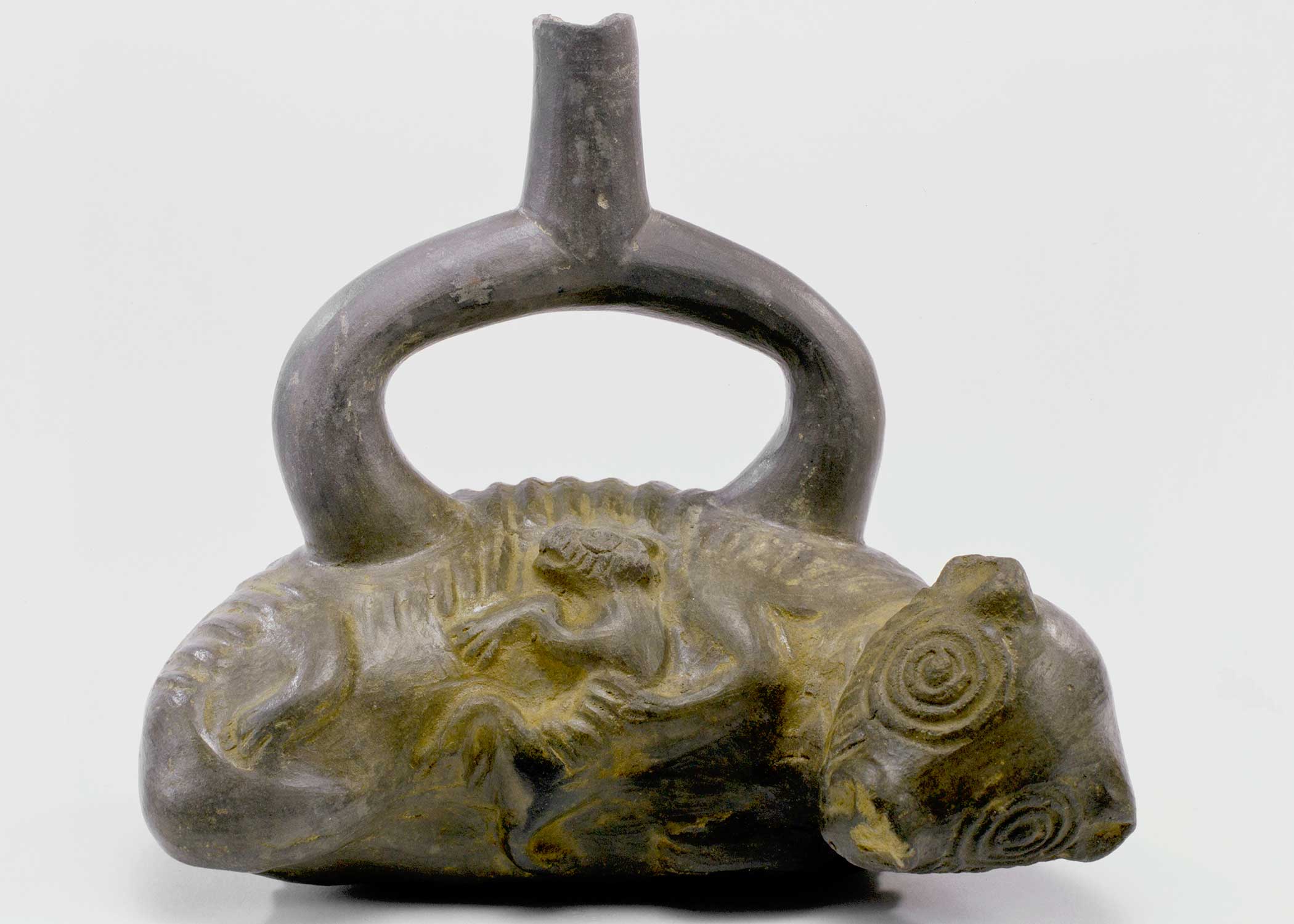
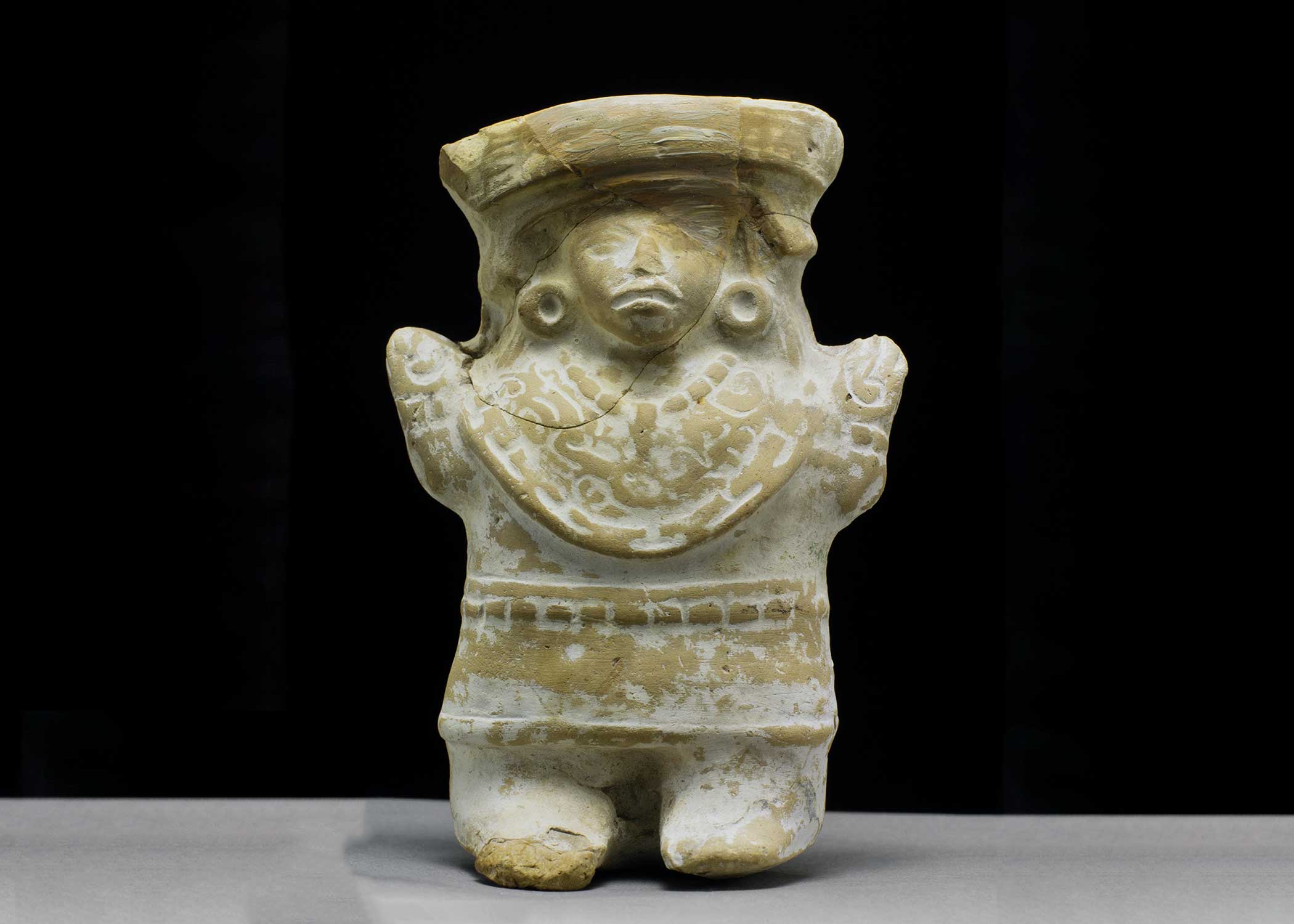
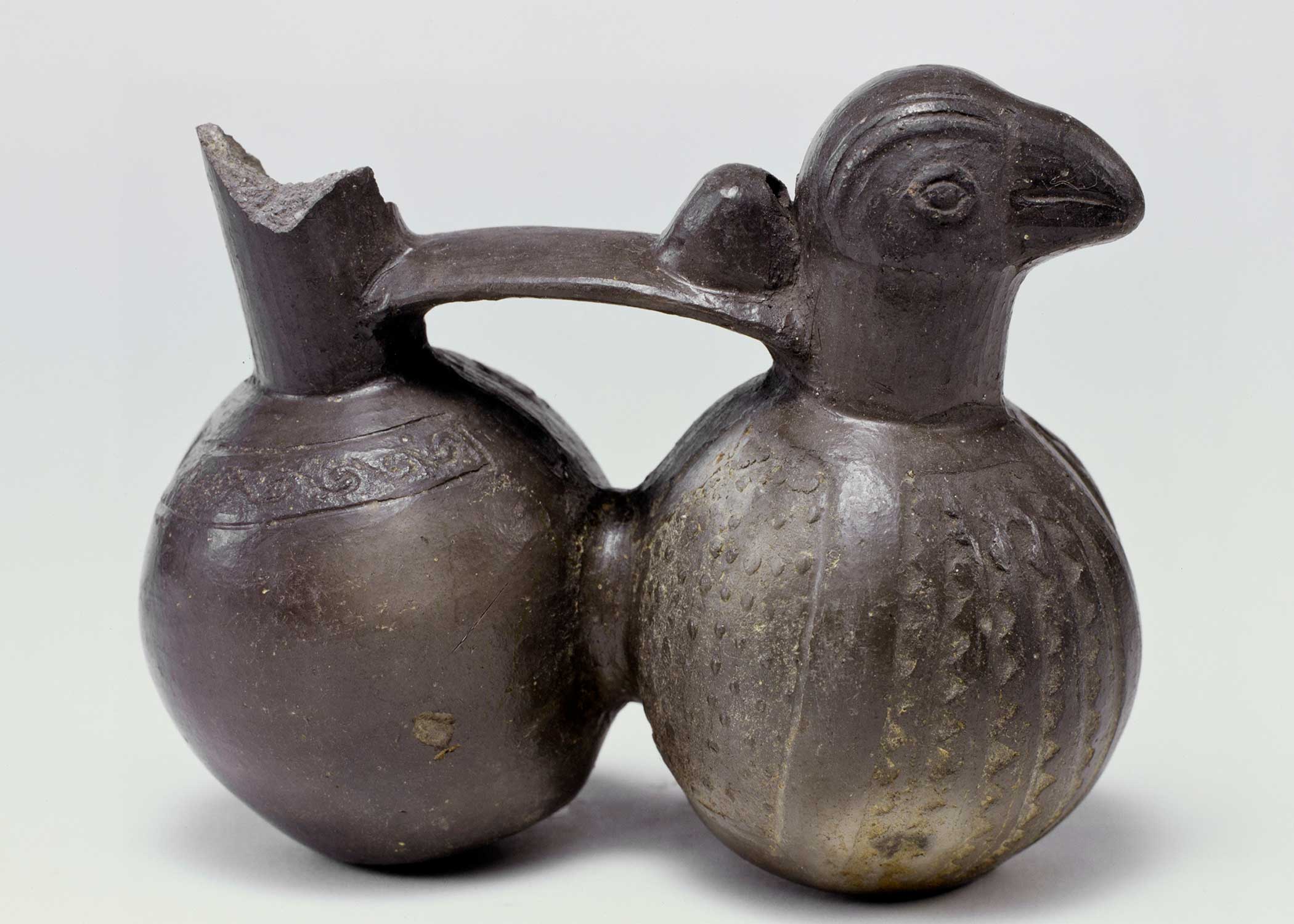
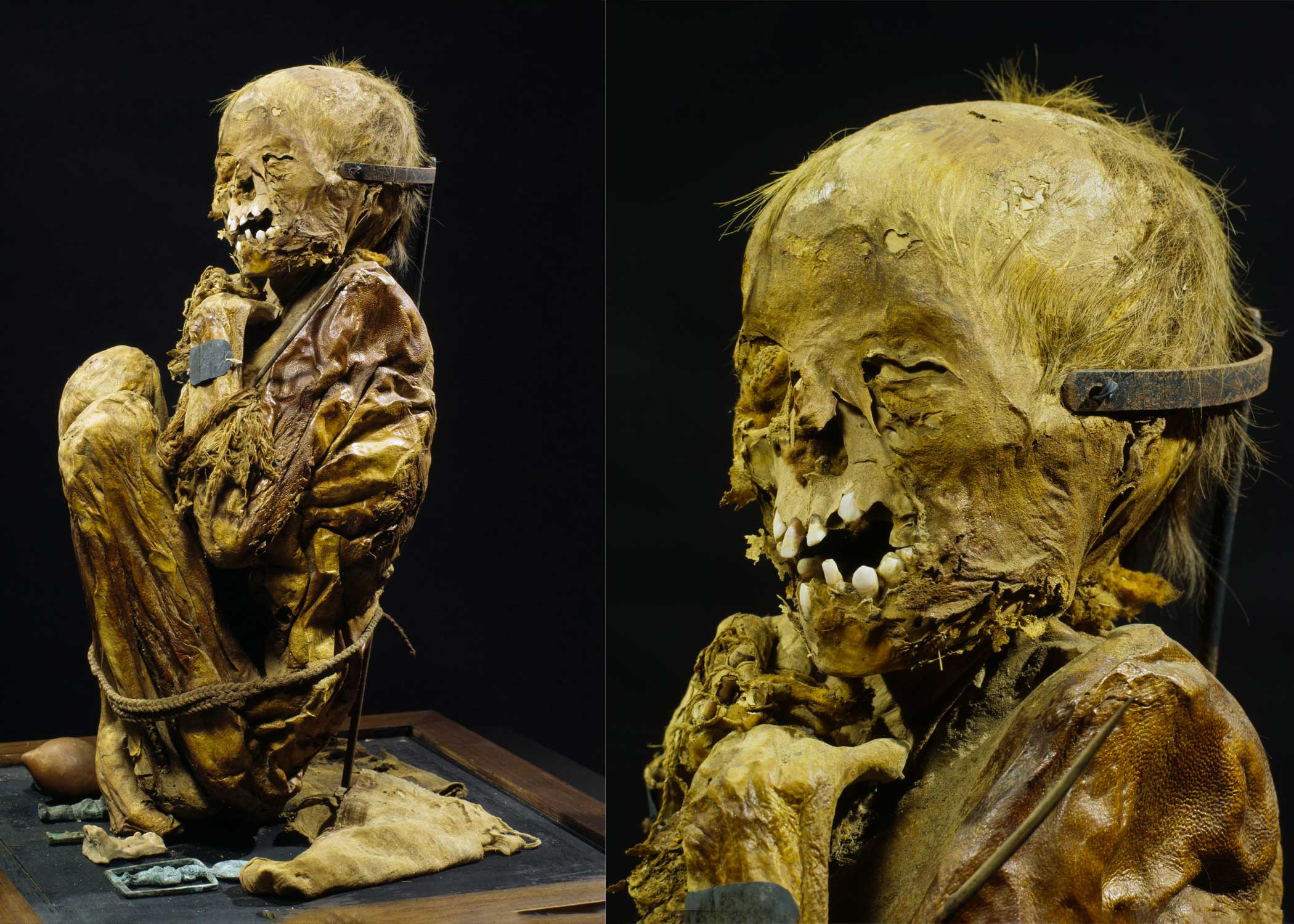
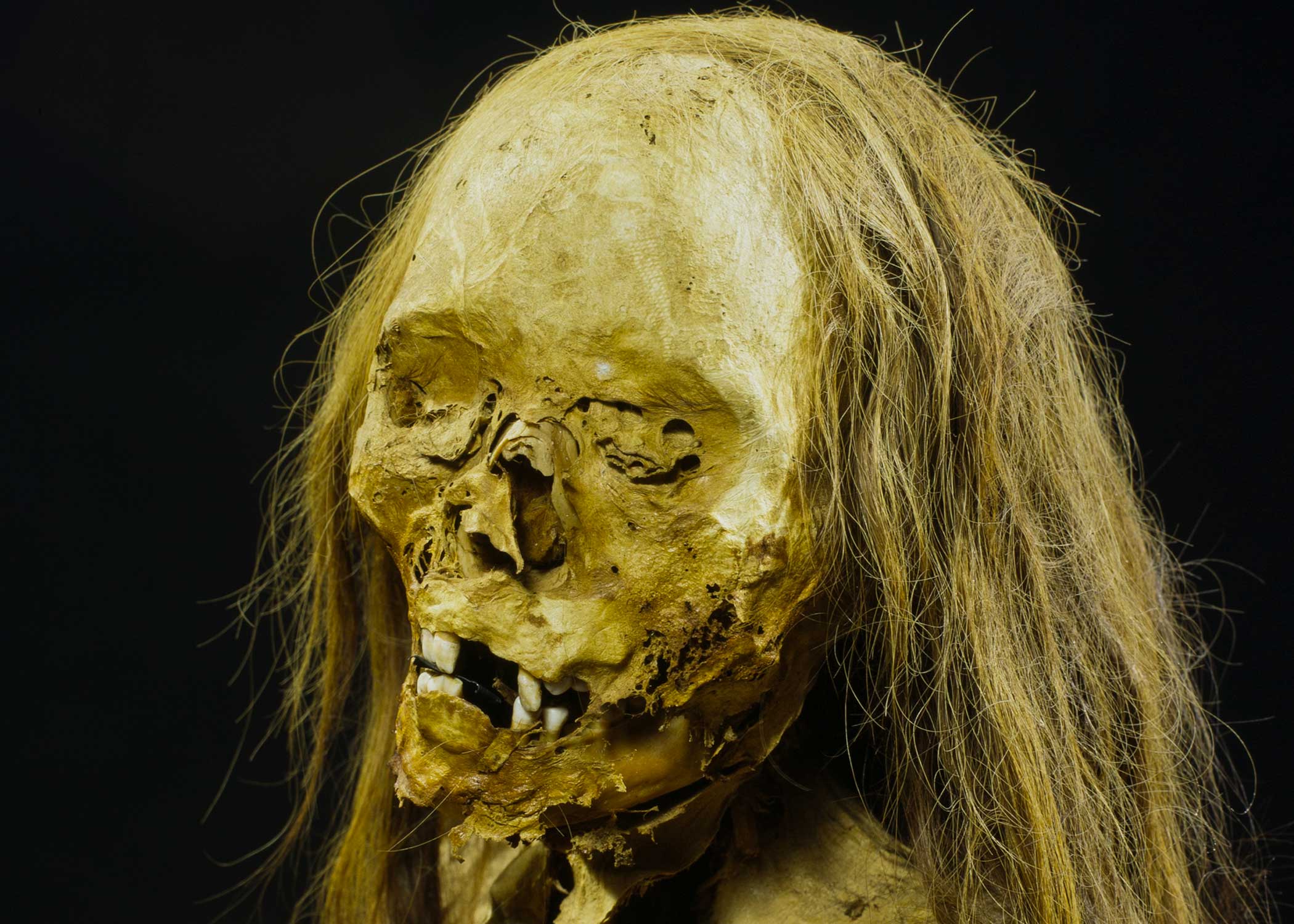
Dentro do mesmo contexto de exotismo, mas com contornos bastante diferentes, a colecção pré-colombiana, que foi oferecida pelo Conde de D. Januário ao Museu Arqueológico d Carmo, em finais do século XIX, é um dos núcleos mais atractivos do museu, constituído por um conjunto de cerâmicas, estatuetas e duas múmias. Segundo as tradições dos ritos funerários da cultura Chancay, os corpos eram colocados em posição fetal e envoltos em têxteis, fazendo-se acompanhar de alguns utensílios de devoção e protecção, bem como de instrumentos que simbolizassem o seu estatuto social. Alguns desses objectos, tanto da Múmia Rapaz como da Múmia Mulher, estão expostos no lado esquerdo da vitrina que se encontra à sua frente, onde se destacam a faca cerimonial e as estatuetas do deus sol.
Ainda nesta sala, pode observar-se a antiga biblioteca da Associação dos Arqueólogos Portugueses e uma múmia egípcia, que foi oferecida ao Museu Arqueológico Do Carmo no século XX.
Within the same context of exoticism, but with quite different contours, the pre-Columbian collection, which was offered by the Count of São Januário to the museum in the late nineteenth century. It is one of the most attractive nuclei of the museum, consisting of a set of ceramics, statuettes and two mummies. According to the traditions of the Chancay funeral rites, the bodies were placed in the fetal position and wrapped in textiles, accompanied by some tools of devotion and protection, as well as instruments that symbolized their social status. Some of these objects, both as Mummy Boy Mummy Women are exposed on the left side of the display case that is in front, some that stand out are the ceremonial knife, the statuettes with the sun.
Also, in this room, you can see the old library of the Association and an Egyptian mummy, which was offered to the museum in the twentieth century.