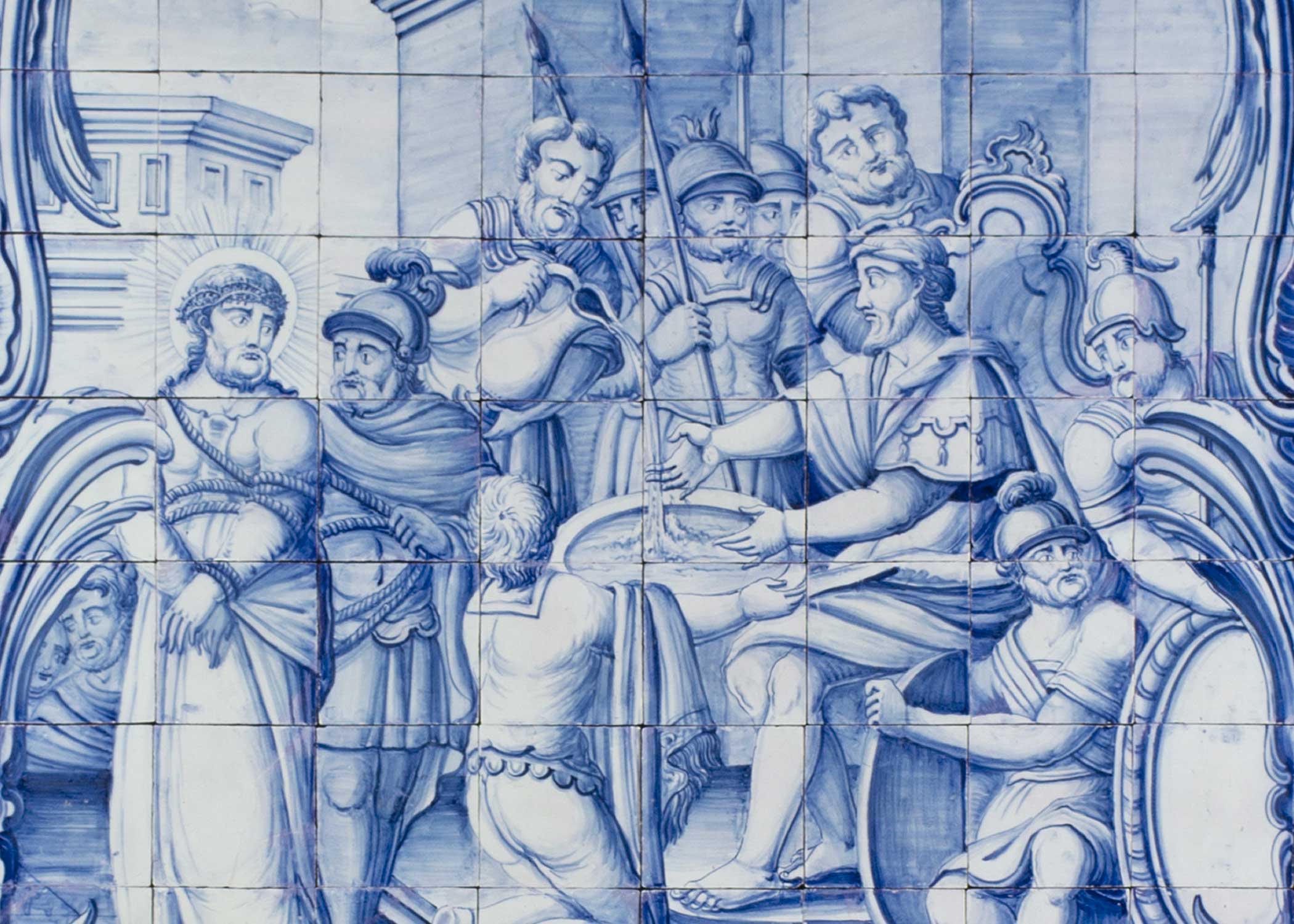
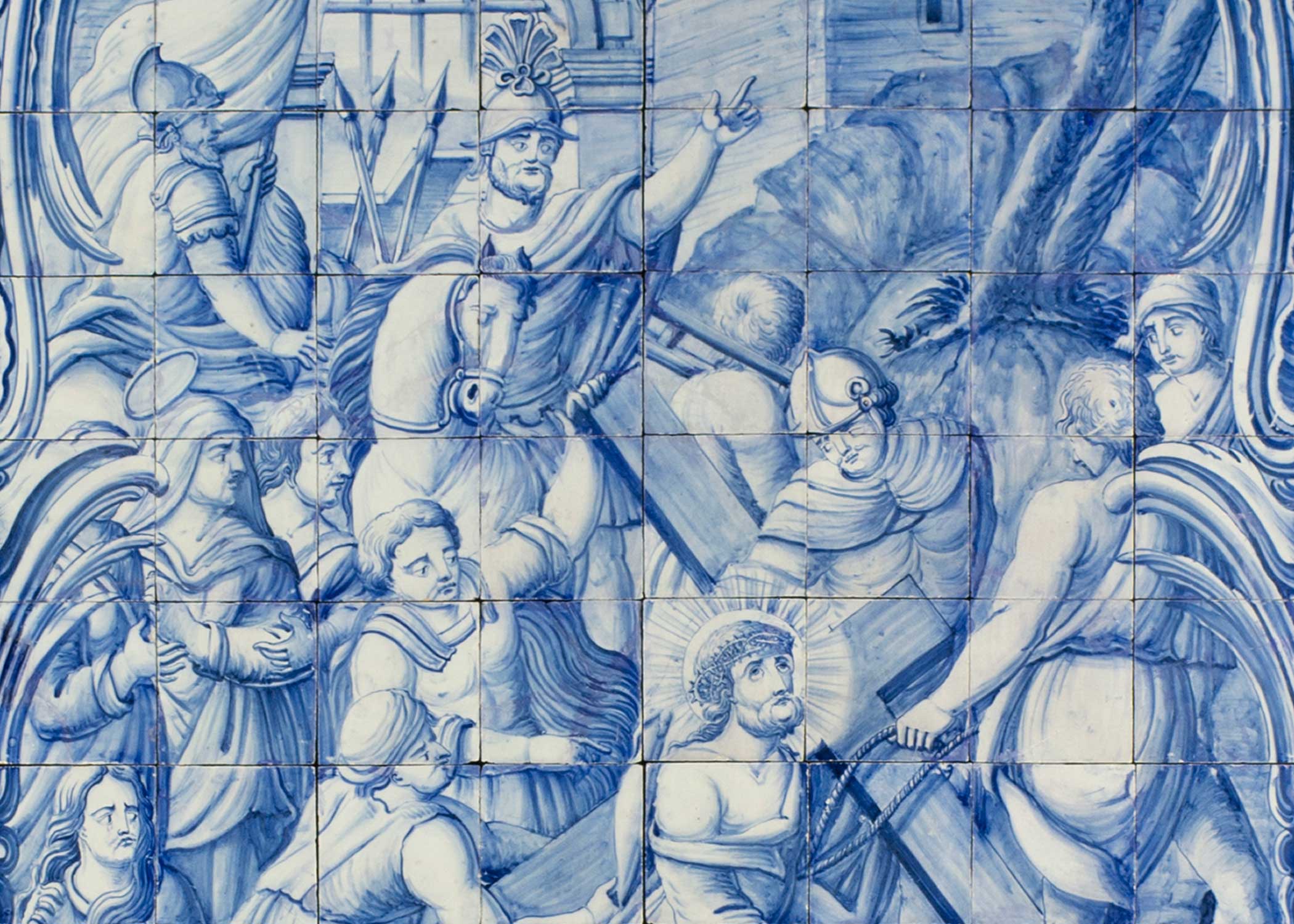
Os painéis setecentistas dos Passos da Paixão de Cristo, atribuídos à oficina de Francisco Jorge da Costa, provenientes do antigo Convento de S. Félix de Chelas são constituídos pelas seguintes cenas: Lava – Pés, Jesus no Horto (ou comunhão), Prisão de Jesus (o Beijo de Judas), Jesus ante Caifás, Jesus na Presença de Pilatos, Flagelação de Jesus, Jesus Coroado de Espinhos (Senhor da Cana Verde), Jesus apresentado à Multidão (Ecce Homo), Pilatos lava as mãos, Jesus a caminho do Calvário, Jesus é içado na Cruz, Calvário, Jesus é descido da Cruz, Deposição no Túmulo.
Trata-se do conjunto azulejar mais completo, sobre o tema da Paixão de Cristo em Portugal, que chegou até ao presente, revelando uma excelente qualidade pictórica.
Este conjunto de painéis foi oferecido ao Museu Arqueológico do Carmo pelo Ministério da Guerra em 1898.
The Panels of the Passion of Christ from the former Convent of São Félix of Chelas are made up of the following scenes: Foot washing, Jesus in the Garden (or communion), Jesus' Arrest (the Kiss of Judas), Jesus before Caiaphas, Jesus in the Presence of Pilate, Flagellation of Jesus, Crowned Thorn Jesus (Lord of the Green Cane), Jesus Presented to the Crowd (Ecce Homo), Pilate Washes His Hands, Jesus on his way to Calvary, Jesus is hoisted on the Cross, Calvary, Jesus is descended from the Cross, Deposition in the Tomb, which were attributed to the workshop of Francisco Jorge da Costa dating from the eighteenth century.
It is the most complete tile set on the Passion theme, which has come to the present, revealing a very good quality and detailed pictorial execution.
This set of panels was offered to the Museum by the Ministry of War in 1898.